


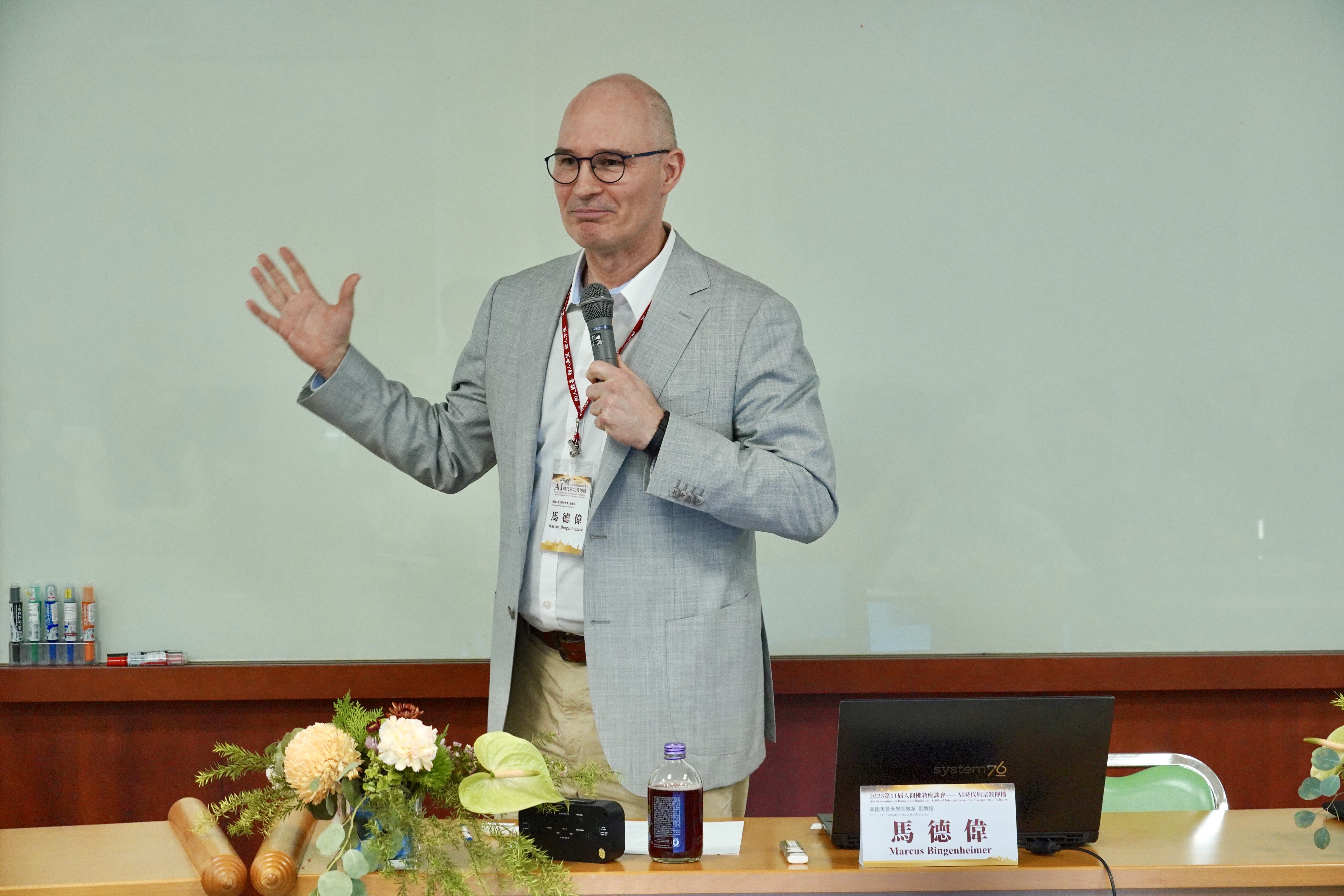

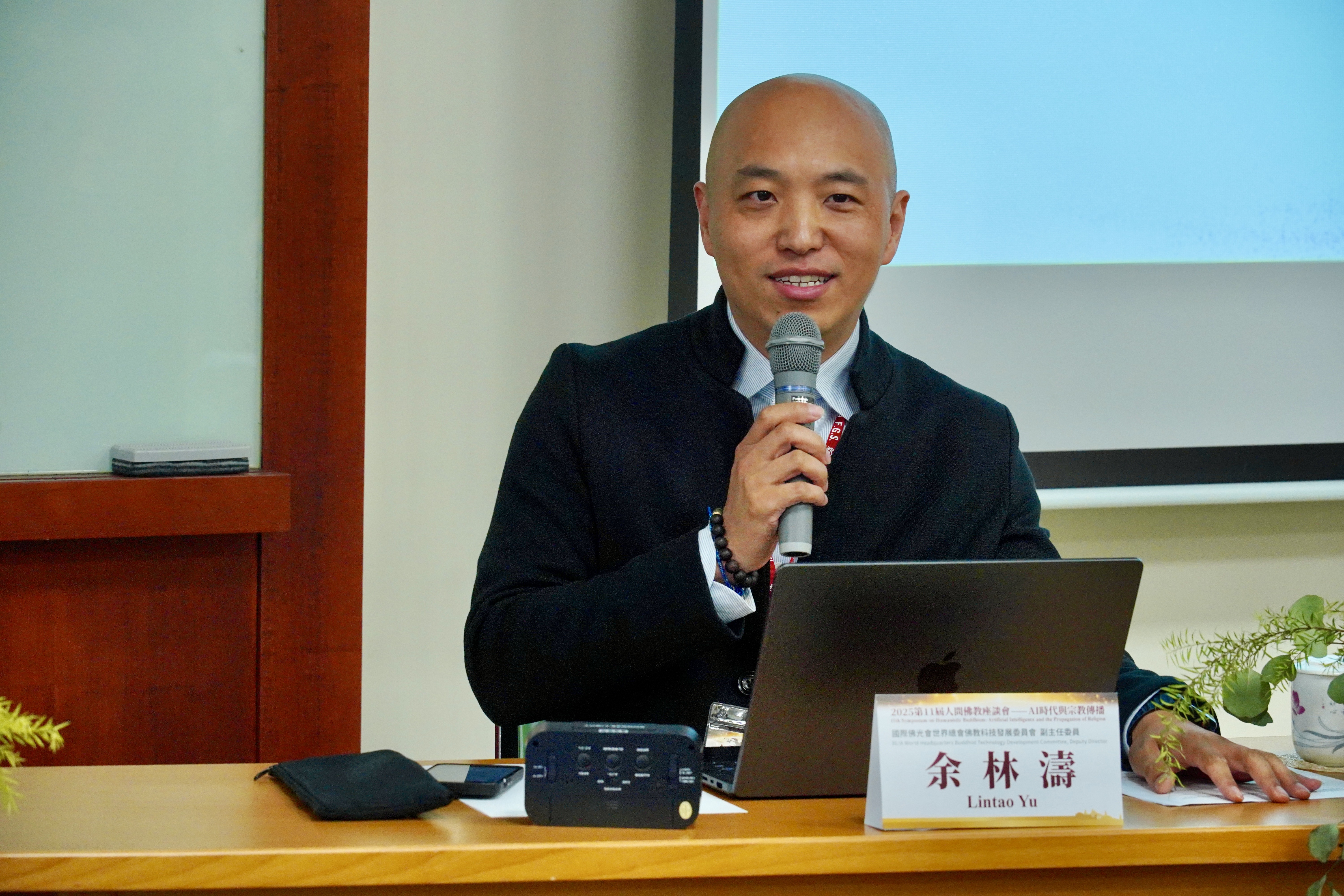
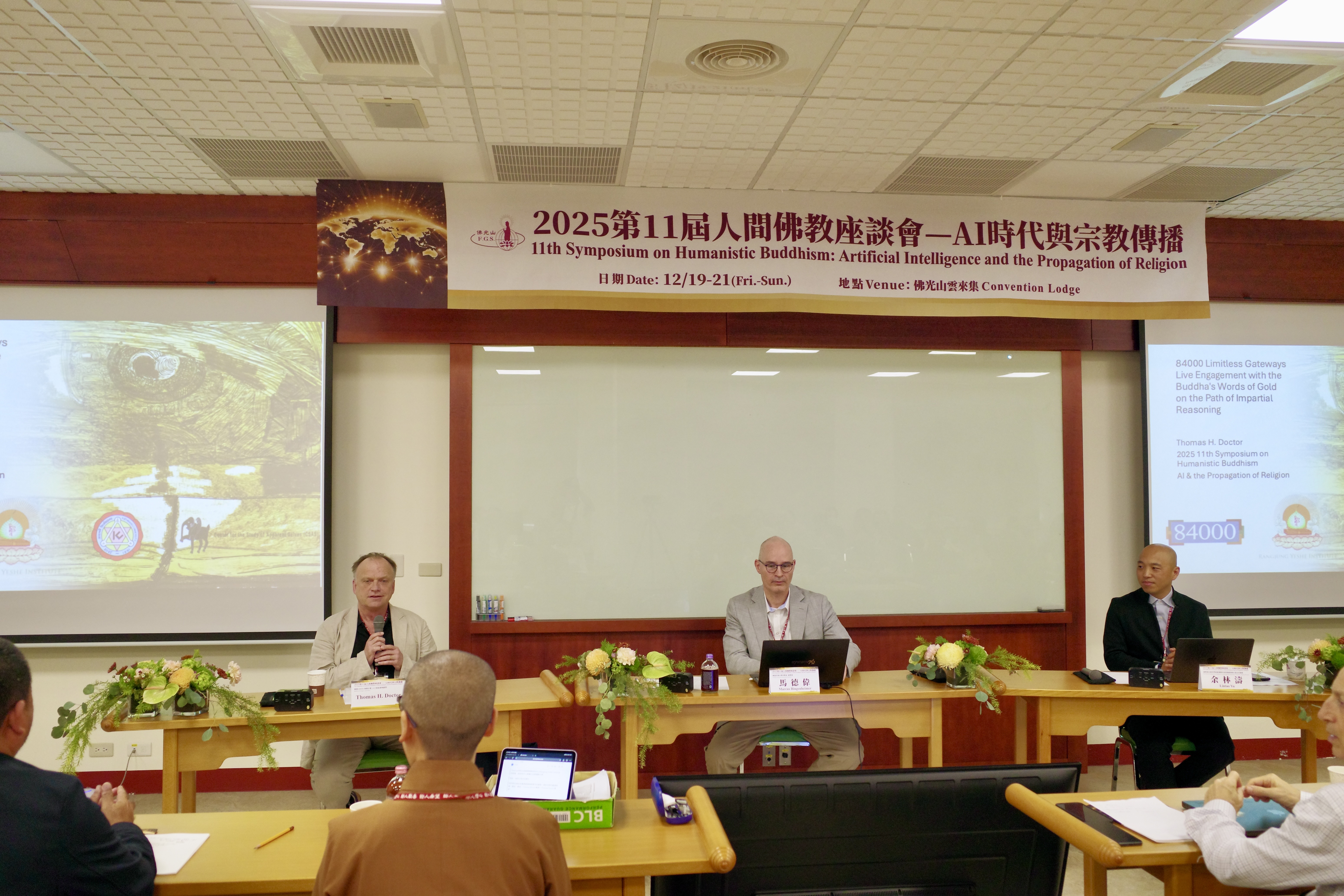
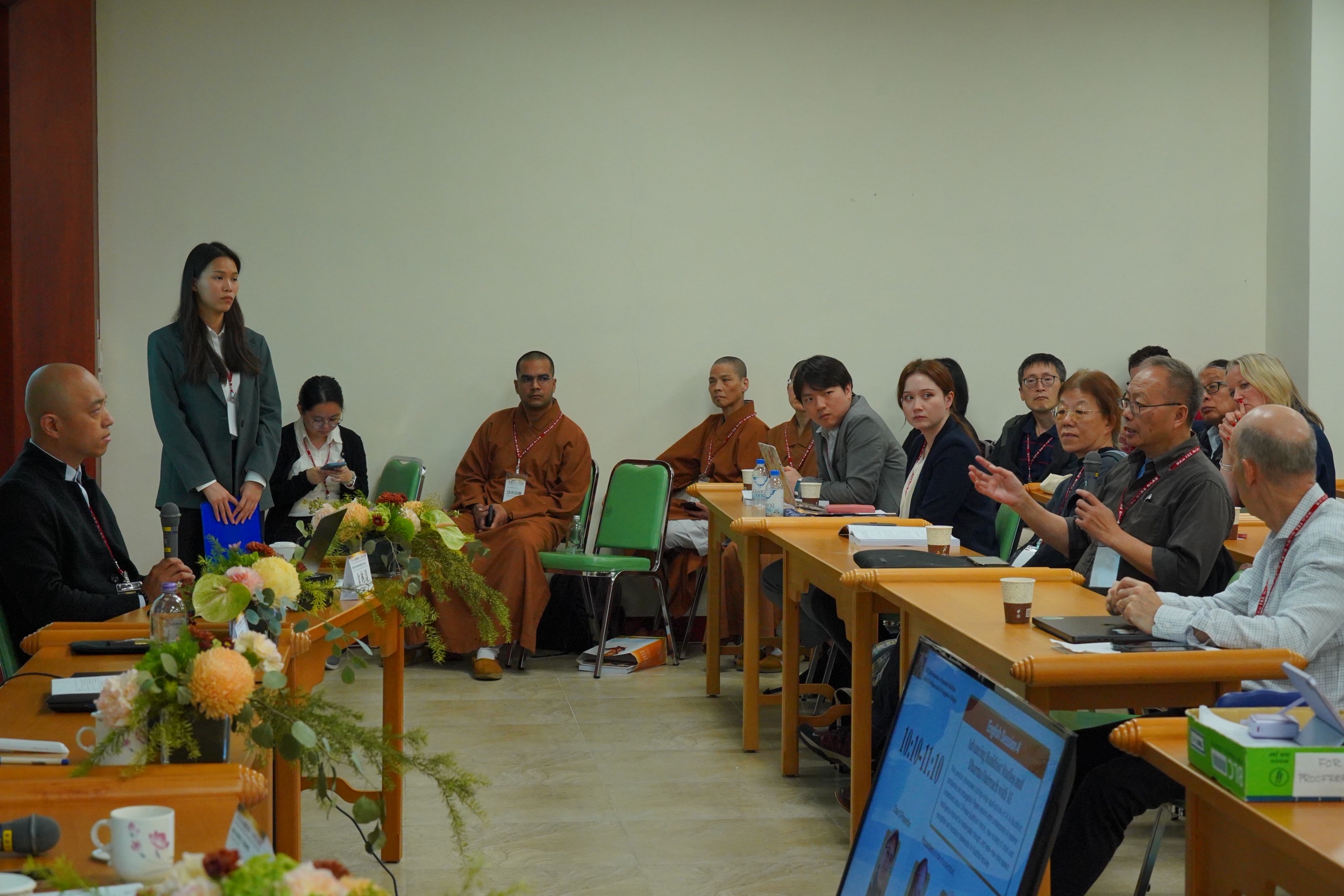
Panel Four of the 2025 11th Symposium on Humanistic Buddhism, themed "Advancing Buddhist Studies with Dharma Outreach with AI," focused on the intersection of rigorous scholarship and technological innovation. Chaired by Dr. Marcus Bingenheimer, the session convened a unique mix of academics, technologists, and Dharma propagators to demonstrate how artificial intelligence is not just preserving Buddhist history, but actively decoding it for a modern audience.
The Uncertain Future of Translation
Dr. Marcus Bingenheimer (Associate Professor in the Department of Religion at Temple University) framed the discussion "What do Little Machines in Fall 2025 know about Chinese Buddhist History?" by highlighting the shifting landscape of translation in the age of Large Language Models. A pioneer in the digital humanities for Buddhism, Bingenheimer emphasized that while AI offers unprecedented access to vast archives, it necessitates a new level of critical engagement. He noted that the field is transitioning from manual digitization to AI-assisted analysis, a shift that requires scholars to act as knowledgeable guides for algorithmic tools to ensure that the Dharma's nuances are preserved during automated processing.
Limitless Gateways: AI and the Path of Reasoning
Dr. Thomas Doctor (AI Strategic Consultant for 84000) presented on the topic "84000 Limitless Gateways: Live Engagement with the Buddha’s Words of Gold on the Path of Impartial Reasoning," introducing a visionary interface known as "Limitless Gateways." Moving beyond static translation, Doctor presented a framework based on "impartial reasoning," inspired by the Buddha’s instruction to test teachings like a goldsmith tests gold. This new AI-driven platform allows users to engage with the Tibetan canon (Kangyur) through a dynamic "debate logic" format. By modeling the dialectical intelligence of a college of scholars, the system enables users to ask questions and receive answers strictly grounded in scripture. Doctor emphasized that this approach trains AI not just to retrieve data, but to model "practically aligned wisdom," ensuring that digital engagement leads to genuine insight and "universal care" rather than mere information consumption.
Solving the "Homophone Problem" in Real-Time
Addressing the technical challenges of live Dharma propagation, Lintao Yu (Deputy Director, BLIA Buddhist Technology Development Committee) discussed "Near-Real-Time High-Accuracy Speech Recognition and Translation for Buddhist Lectures: A Collaborative Framework Combining Fine-Tuned Automatic Speech Recognition and Large Language Models" and unveiled a "Collaborative Framework" for near-real-time transcription and translation. Yu highlighted a critical issue in current interpretation tools: the prevalence of homophones in Chinese Buddhist lectures, where standard AI often selects words that "sound right but mean the wrong thing," consequently distorting key doctrinal terms. His solution is a pragmatic two-step system Orato Flow that combines a domain-adapted speech recognition model with a Large Language Model (LLM) for contextual correction. This hybrid approach ensures specific terminology is captured faithfully in real-time, allowing the system to refine spoken audio into high-accuracy transcripts that truly convey the meaning of the Dharma across languages.
Interactive Dialogue: System Architecture and Applications
The Q&A session evolved into a technical exchange, examining the architecture behind the presented solutions. Responding to inquiries about his transcription system, Lintao Yu explained that he combines Azure Speech Services with a GPT-based refinement process, while using smaller, efficient models to maintain fast translation speeds. When asked about opening the system via API for public sector use, Yu expressed openness to future adaptation.
Future Outlook: The Symbiosis of Human and Machine
The session concluded with a shared vision that the divide between academic studies and faith-based outreach is rapidly narrowing. Whether through Bingenheimer's critical digital humanities, Doctor’s dialectical AI platforms, or Yu’s hybrid translation models, technology is emerging as a critical partner in the transmission of Buddhism. The panel agreed that the future of Buddhist studies lies in this symbiotic relationship where human wisdom guides the machine, and the machine amplifies the reach and precision of the Dharma.
【Photo Credits: Chiayuan Liu】
