





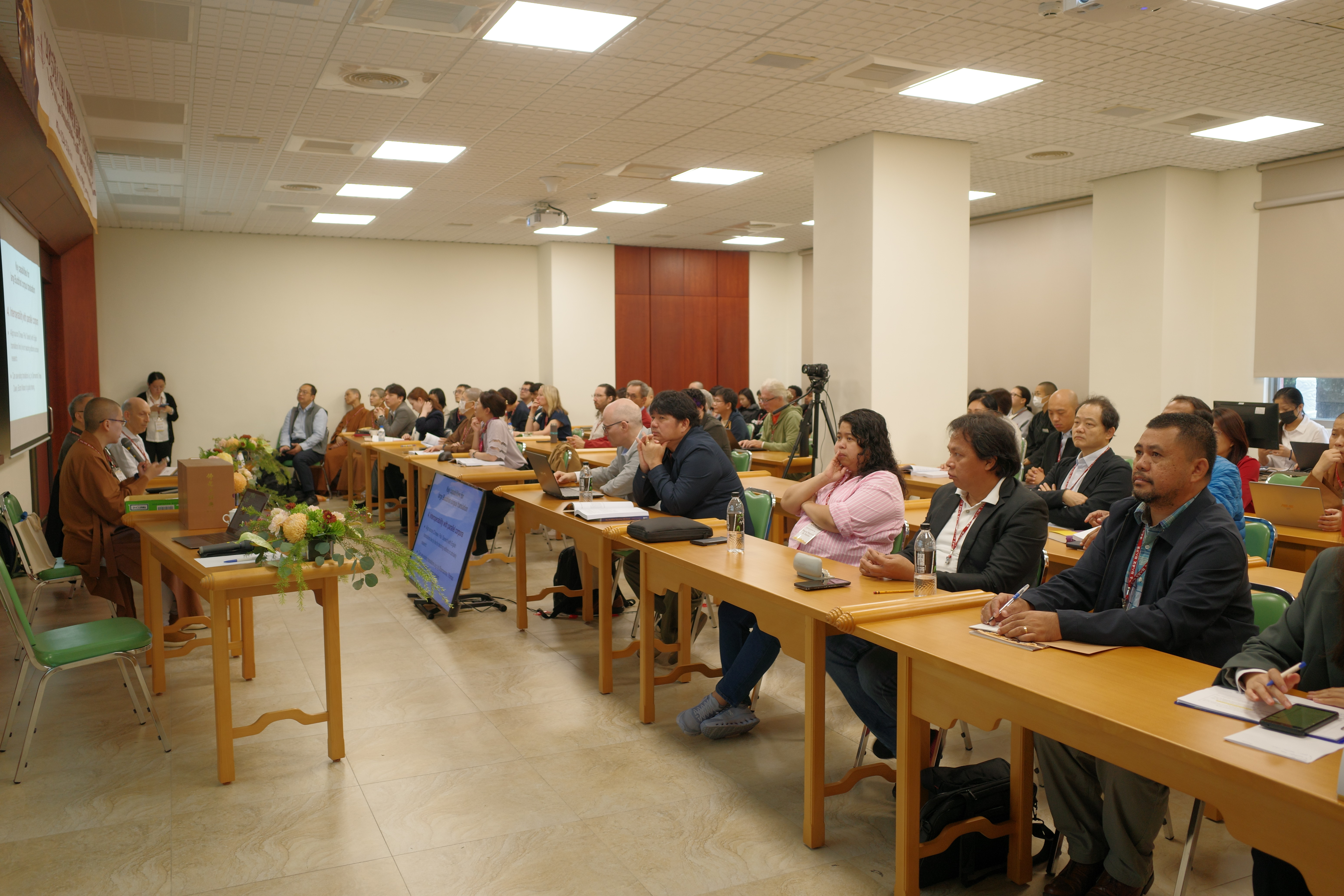
The third English panel of the 11th Symposium of Humanistic Buddhism, themed "AI in the Fo Guang Dictionary of Buddhism English Translation Project and MITRA," showcased how emerging AI tools support large-scale Buddhist translation and lexicographical research. Chaired by Ven. Miao Guang (Deputy Chancellor of the Fo Guang Shan Institute of Humanistic Buddhism), the session brought together scholars and technologists working on the Fo Guang Dictionary of Buddhism (FGDB) English Translation Project, the Dharmamitra platform, and innovative applications of AI to the study of Buddhist terminology evolution.
The Fo Guang Dictionary of Buddhism Translation Project
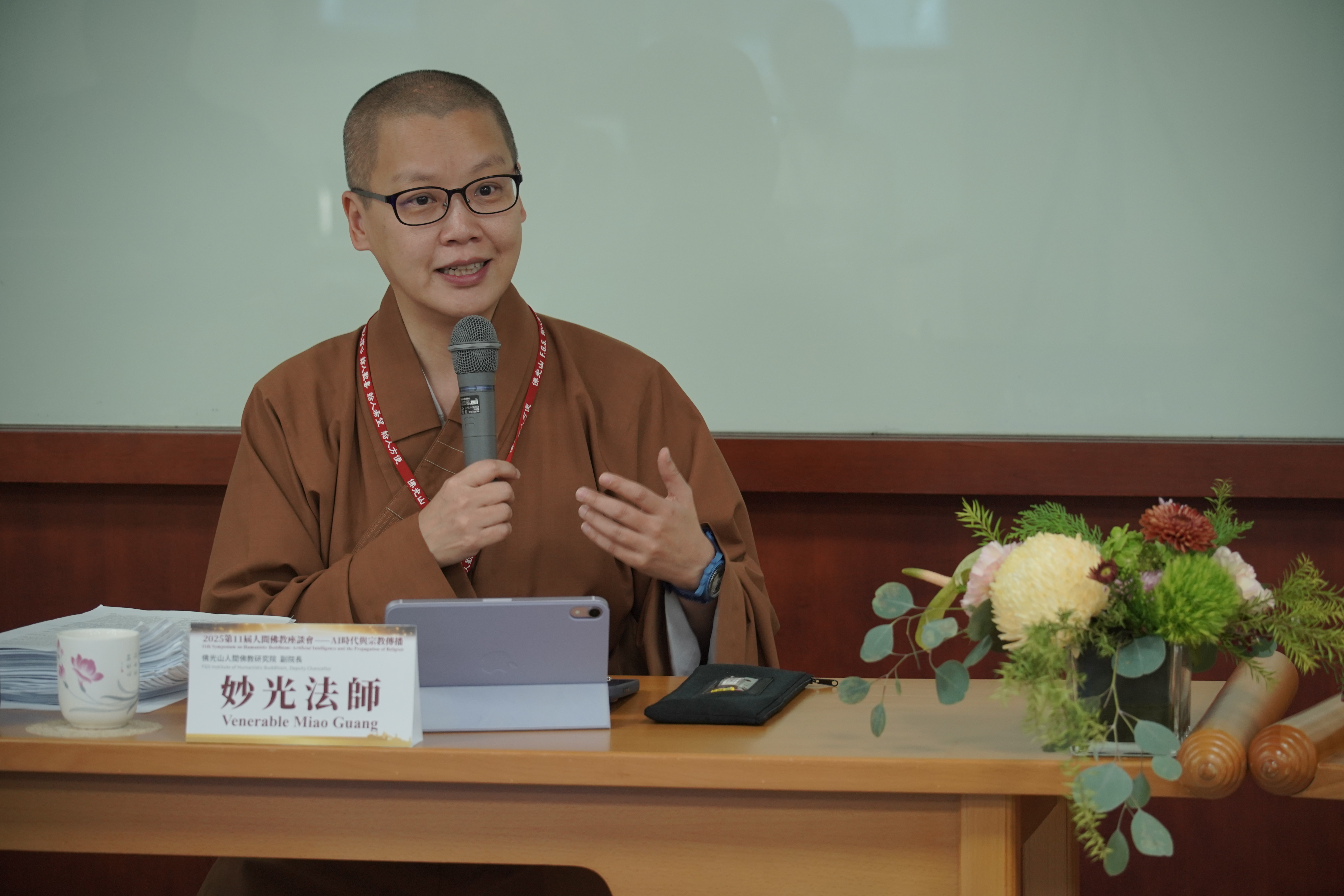
Ven. Miao Guang (Deputy Chancellor, FGS Institute of Humanistic Buddhism) opened the session with "AI and Digital Humanities in Action: The Fo Guang Dictionary of Buddhism Translation Project," discussing how artificial intelligence has been systematically integrated through agentic AI and a Human-in-the-Loop framework. By employing AI systems capable of managing large-scale, multi-step translation workflows, such as enforcing glossary consistency and automating scholarly metadata, the project enhances both efficiency and coherence. Human translators, monastics, and scholars remain central, ensuring doctrinal fidelity and ethical integrity through layered review. Framed by Venerable Master Hsing Yun's teaching that technology serves as a skillful means for transmitting the Dharma, the presentation illustrated how AI can function as a supportive condition for wisdom rather than a substitute for human understanding.
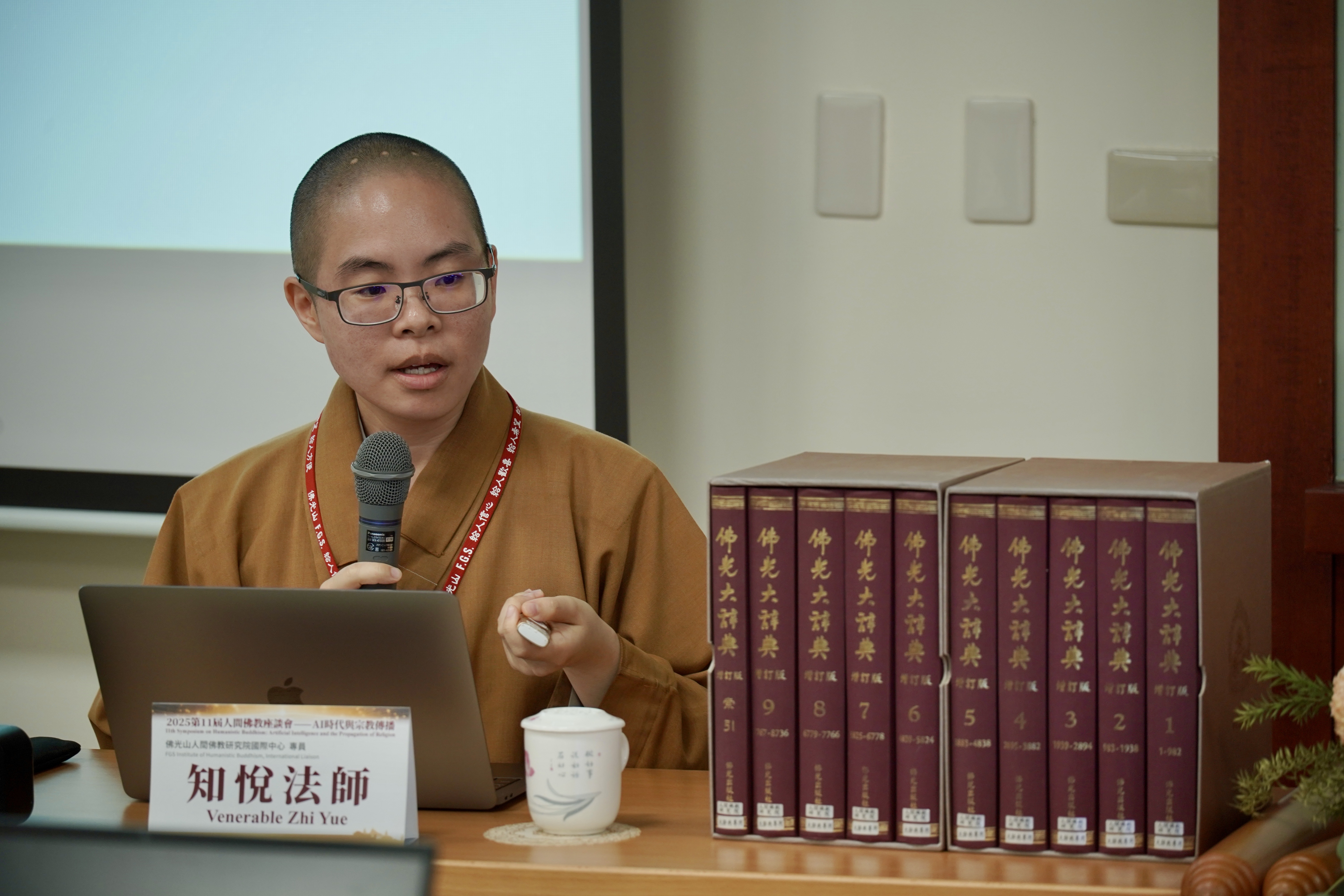
Ven. Zhi Yue (International Liaison, FGS Institute of Humanistic Buddhism Center of International Affairs) followed with "Using LLMs to Manage Large Scale Translation Projects: Fo Guang Dictionary of Buddhism as a Case Study" examining how Large Language Models (LLMs) are transforming Buddhist translation work. By comparing pre-AI and post-AI phases, she showed how workflows have shifted from slow, labor-intensive production to rapid AI-assisted drafting followed by human curation. While AI significantly increases speed, the paper raised important questions about the changing role of translators and the loss of translation as collective spiritual cultivation. Introducing "vibe coding" as an emerging paradigm, she concluded that AI does not eliminate human participation but redefines it, placing greater emphasis on scholarly judgment and ethical responsibility.
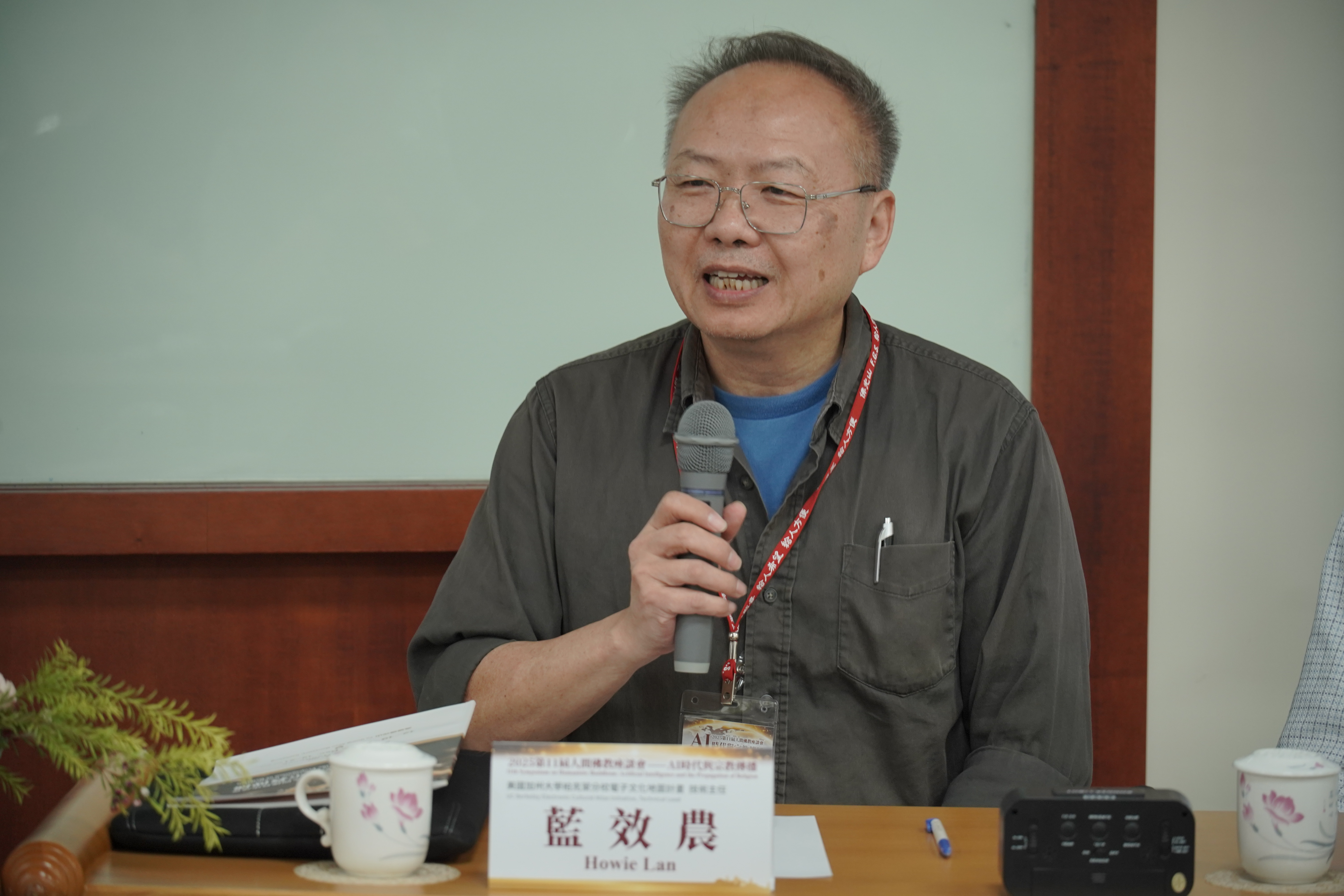
Dr. Howie Lan (Technical Lead, Electronic Cultural Atlas Initiative (ECAI), UC Berkeley) presented "Basing on the Success of FGDB Translation Development, What More Would Follow?", reflecting on the project's completion of the first full Chinese-to-English translation after more than ten years. He emphasized the strategic focus on cultivating local expertise, rigorous human verification, and effective collaboration, which are qualities even more critical in the age of generative AI. Looking ahead, he outlined plans to extend the dictionary into additional languages and introduced FoGuangDB.ai, an AI-assisted platform designed to support multilingual access through Retrieval-Augmented Generation and Small Language Models.
AI-Assisted Research and Multilingual Platforms
Alex Amies (Graduate Student, University of the West) presented "The Use of AI in the Study of the Evolution of Buddhist Terminology in Chinese Translation," research grounded in the Chu San Zang Ji Ji (出三藏記集), the earliest extant Buddhist bibliographical catalog compiled by Sengyou circa 515 CE. By extracting and analyzing tens of thousands of terms, the study revealed which translators established foundational vocabulary, how later translators refined these terms, and how different strategies shaped the Chinese Buddhist lexicon. The findings highlighted the decisive influence of early translators like An Shigao and Lokakṣema while demonstrating Buddhism's enduring impact on Chinese language development.
Sebastian Nehrdich (Distinguished Assistant Professor, Center for Integrated Japanese Studies, Tohoku University) introduced "Dharmamitra: A Platform that Makes Translation and Discovery of Buddhist Texts Possible Across Language Barriers," a collaborative AI-driven platform developed by Tohoku University with the Tsadra Foundation and Berkeley AI Research Lab. Employing Large Language Models for high-quality machine translation of Sanskrit, Pali, Tibetan, and Chinese alongside vector-based semantic retrieval, the platform allows researchers to instantly locate and understand passages across multilingual corpora, offering a powerful framework for Buddhist textual scholarship while reaffirming human expertise in interpretation.
Together, the five presentations illustrated the transformative potential of AI technologies in Buddhist lexicography and translation studies, demonstrating that AI serves not as a replacement for human expertise but as a powerful tool for amplifying scholarly capabilities and bridging linguistic boundaries that have long separated Buddhist textual traditions.
【Photo Credits: Chiayuan Liu】
