



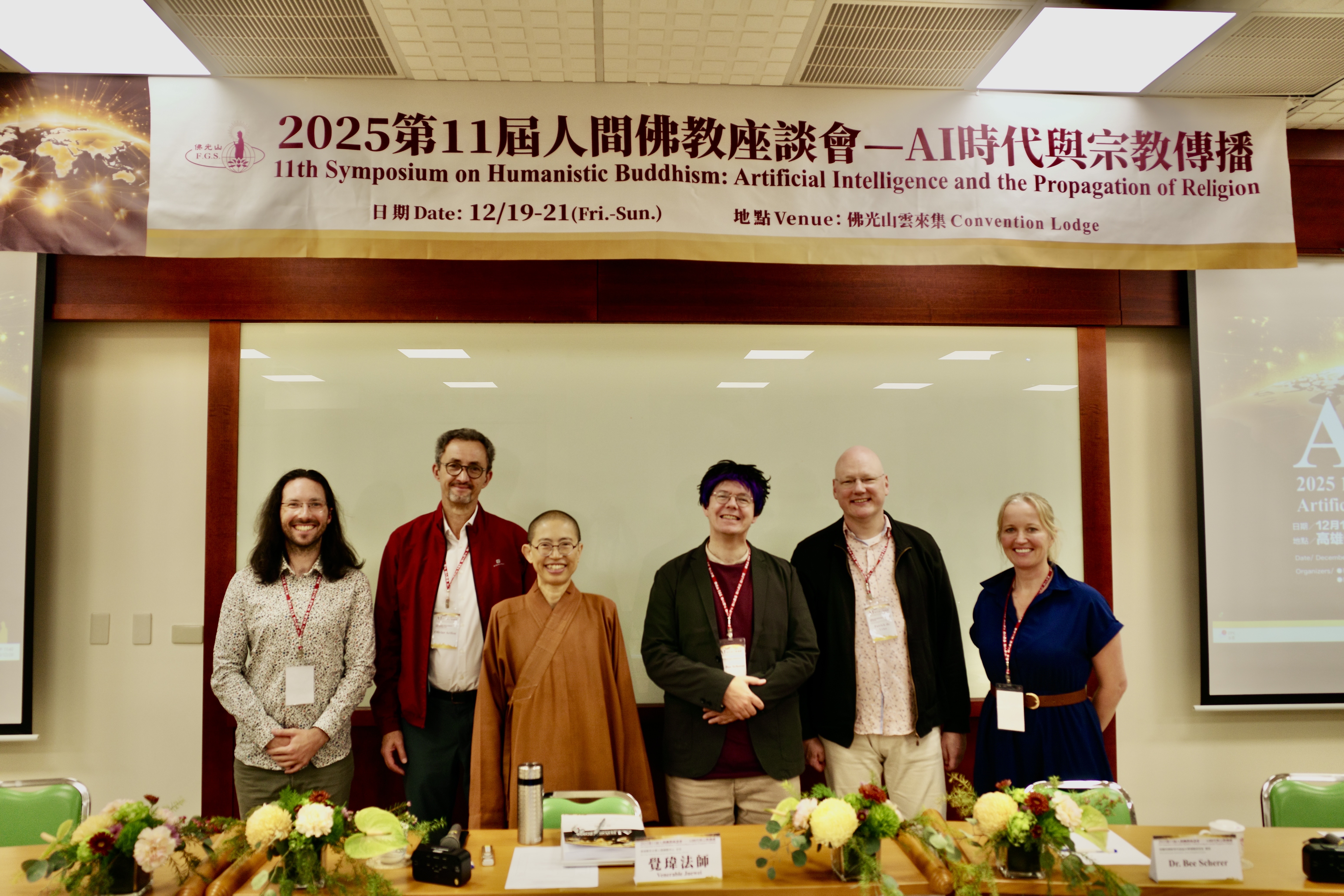
Panel Two of the 2025 11th Symposium on Humanistic Buddhism, themed "AI and Humanistic Buddhism," focused on ensuring that technological advancement remains aligned with the core humanistic values of compassion, wisdom, and moral discernment.
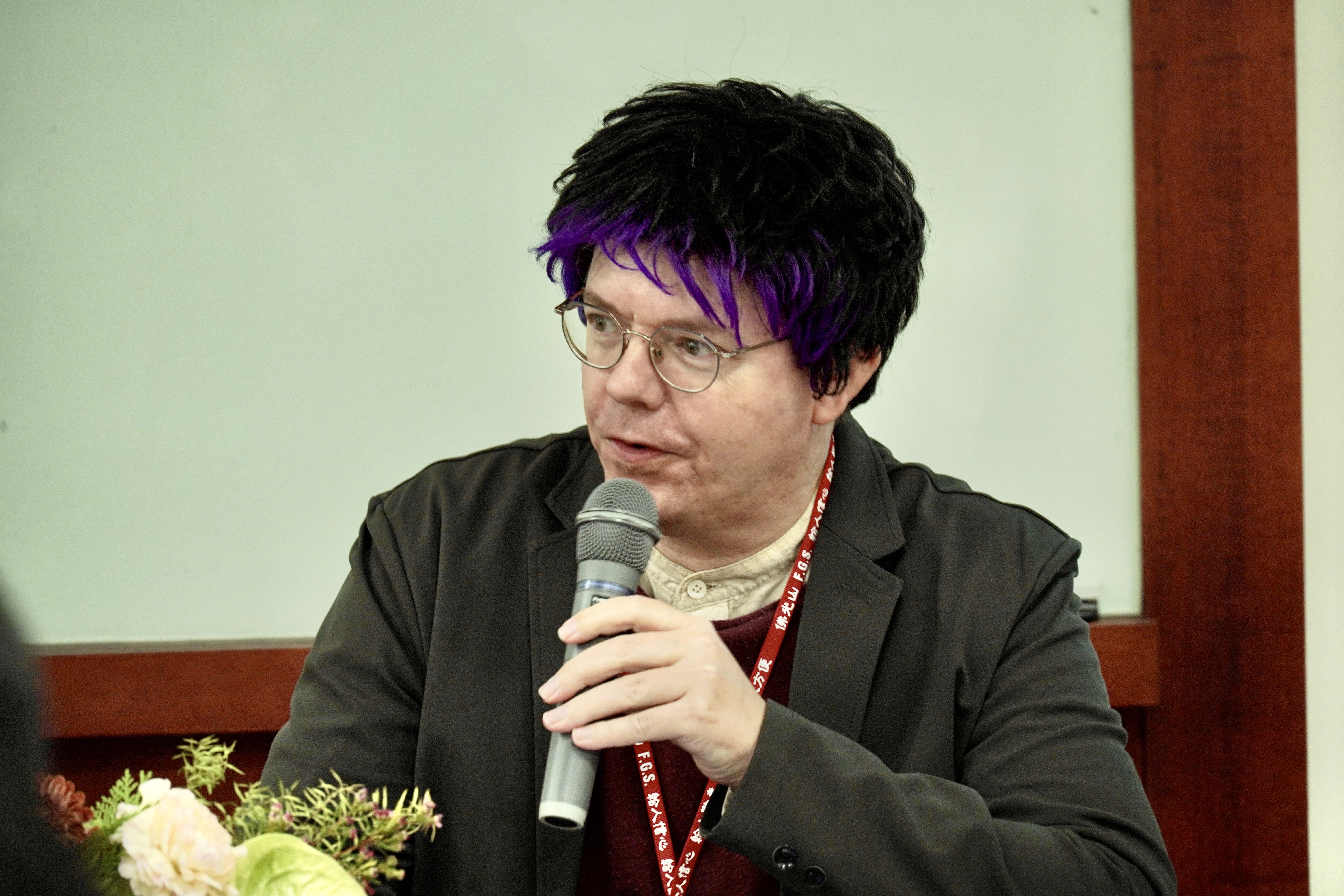
Opening the panel on the theme "AI as a Humanistic Buddhist Tool? Towards a More Sustainable and Kinder Artificial Intelligence," Professor Bee Scherer (Professor of Buddhist Studies and Rector, Buddhist Seminary, VU Amsterdam) and Dr Patrick De Vries (Independent Researcher of Intersectional Centre for Inclusion and Social Justice (INCISE)), offered a critical counterpoint by examining AI through the lens of karuṇā (compassion) and ahiṃsā (non-harming). Scherer critiqued the "cognitive light cone" of current AI models, noting their lack of genuine empathy and the significant environmental costs associated with their operation. They noted that the lack of genuine empathy and compassion is due to the fact that humans lack these moral values. Hence, the machines mirror the issues in humans. They concluded that the development of a Humanistic AI depends entirely on human moral maturity, for if humans fail to embody compassion, we cannot expect to program it into our machines.
From Cushion to App: Addressing Disaffection
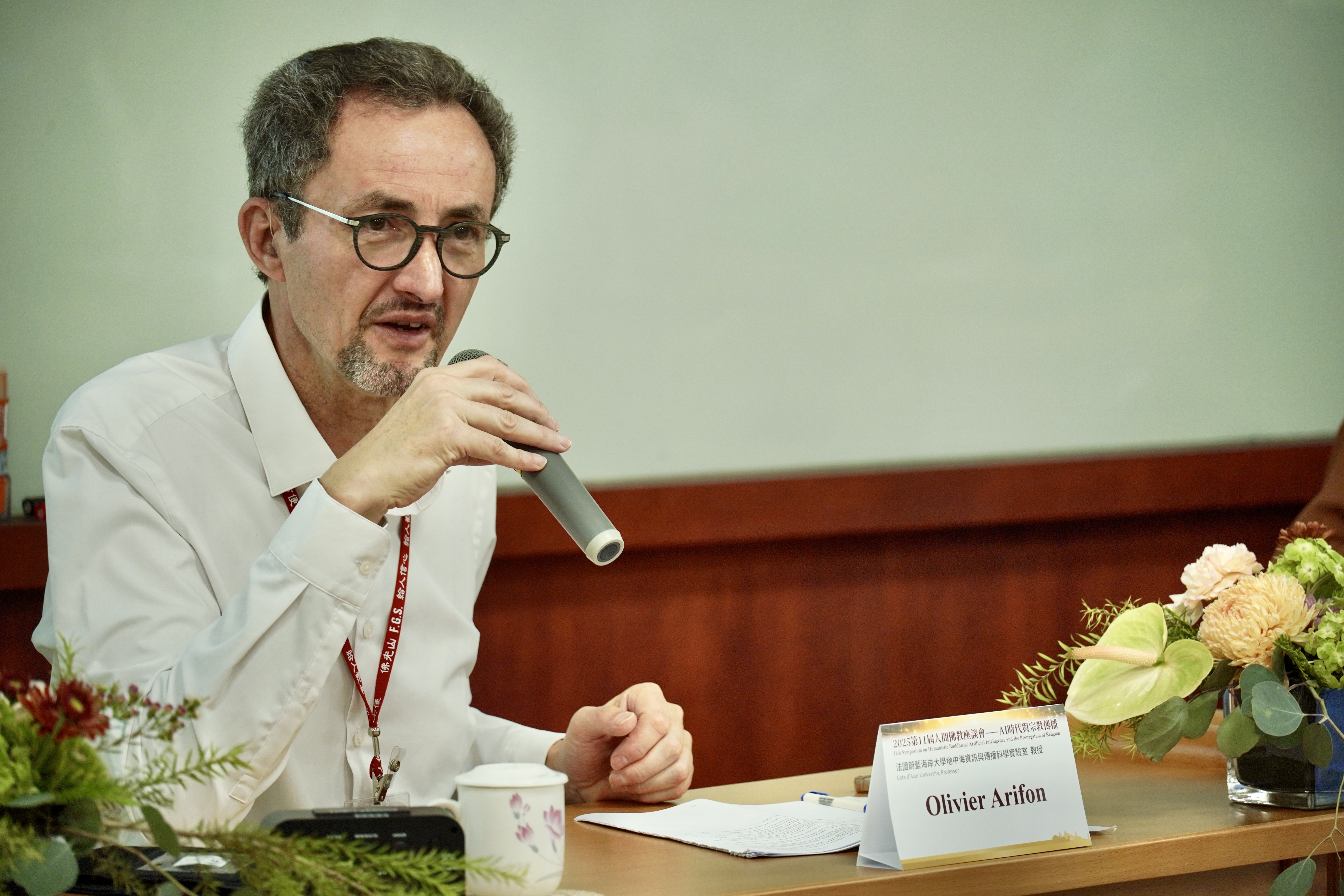
Shifting the focus to the sociological impact of technology, Professor Olivier Arifon (Côte d'Azur University) addressed the growing trend of religious disaffection, noting that globally, 1 in 10 adults under 55 have left their childhood religion. Arifon explored whether digital tools like GuruApp, BuddhaBot, and AskBuddhAI could serve as gateways for this disconnected demographic. While acknowledging the symbolic effectiveness of apps that track mantras or prostrations, he warned of "attention extractivism," where algorithms intrusively break the link between the practitioner and the present moment. Ultimately, Arifon cautioned that while an app might offer convenience, it cannot replace the mysterious and transformative mirror of the master-disciple relationship, and raises serious concerns regarding privacy and surveillance capitalism.
Reframing the Propagator in Liminal Time
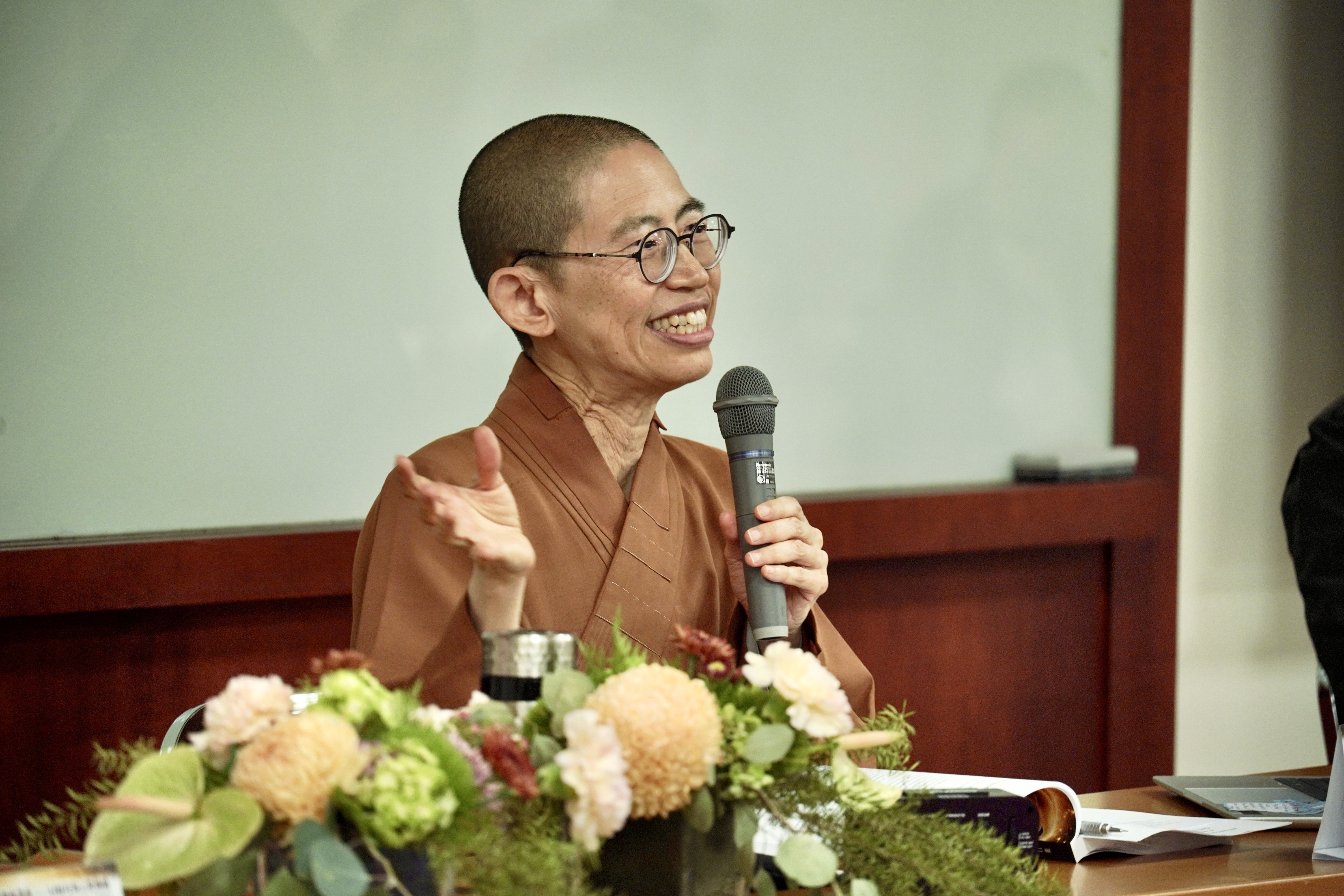
Venerable Dr. Jue Wei (Director, Humanistic Buddhism Centre, Nan Tien Institute) provided the concluding remarks for the panel, focusing on the perspective of religious propagation. She argued that religious propagators must evolve beyond traditional roles to become custodians of truth, modelers of practice, and bridge-builders of communities. To illustrate the need for discernment in an age of hallucinated content, Ven. Juewei presented the "Silicon Sutra: A Dialogue on Empty Metrics." This AI-generated text, set in a minimalist glass boardroom, mimics the style of the Diamond Sutra to discuss corporate illusions. While impressively creative, the example served as a cautionary tale about the blur between authentic wisdom and algorithmic mimicry, underscoring the propagator's role in stewarding textual integrity.
Navigating the Future with Intentionality
The collective insights from the panel underscore that the future of religious propagation lies not in merely catching up to technology, but in actively shaping its ethical trajectory. A central takeaway was the necessity of "input ethics," the conscious decision to prioritize human connection, critical inquiry, and contemplative pausing over algorithmic efficiency. The panelists agreed that higher education institutions must become laboratories of hope, equipping future leaders to co-create a religio-techno ecosystem where technology supports, rather than diminishes, human flourishing.
【Photo Credits: Chiayuan Liu】
