


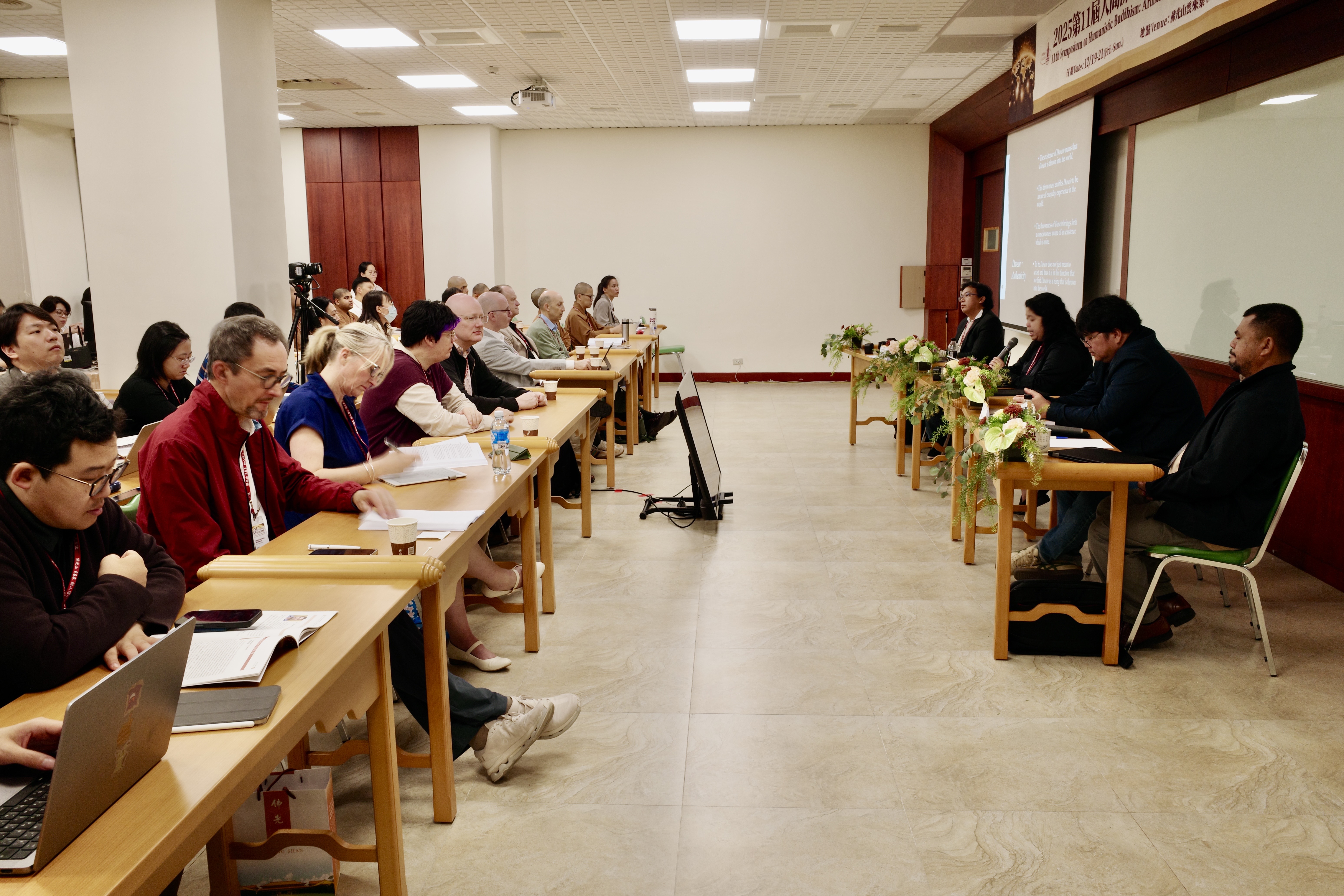
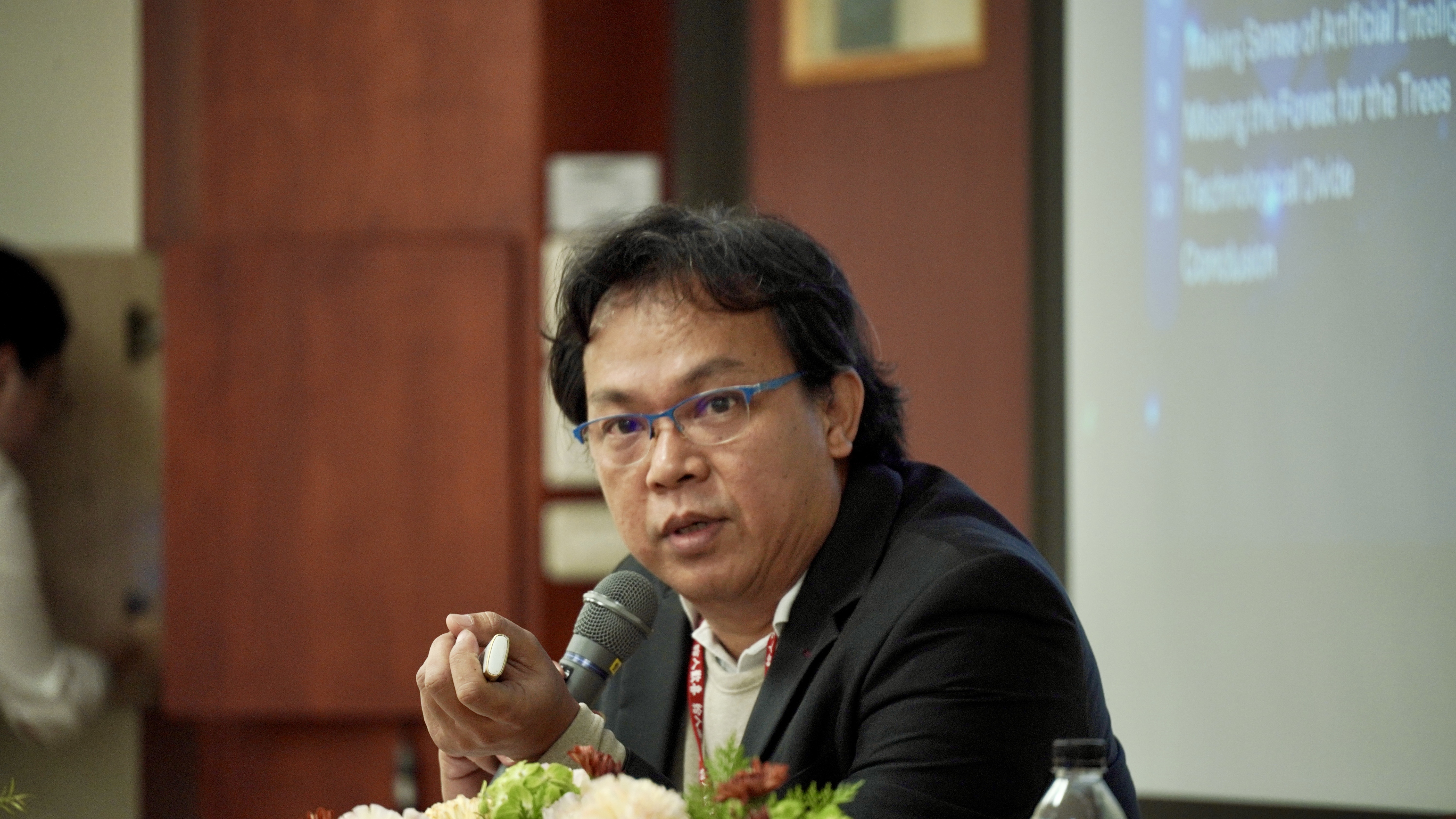
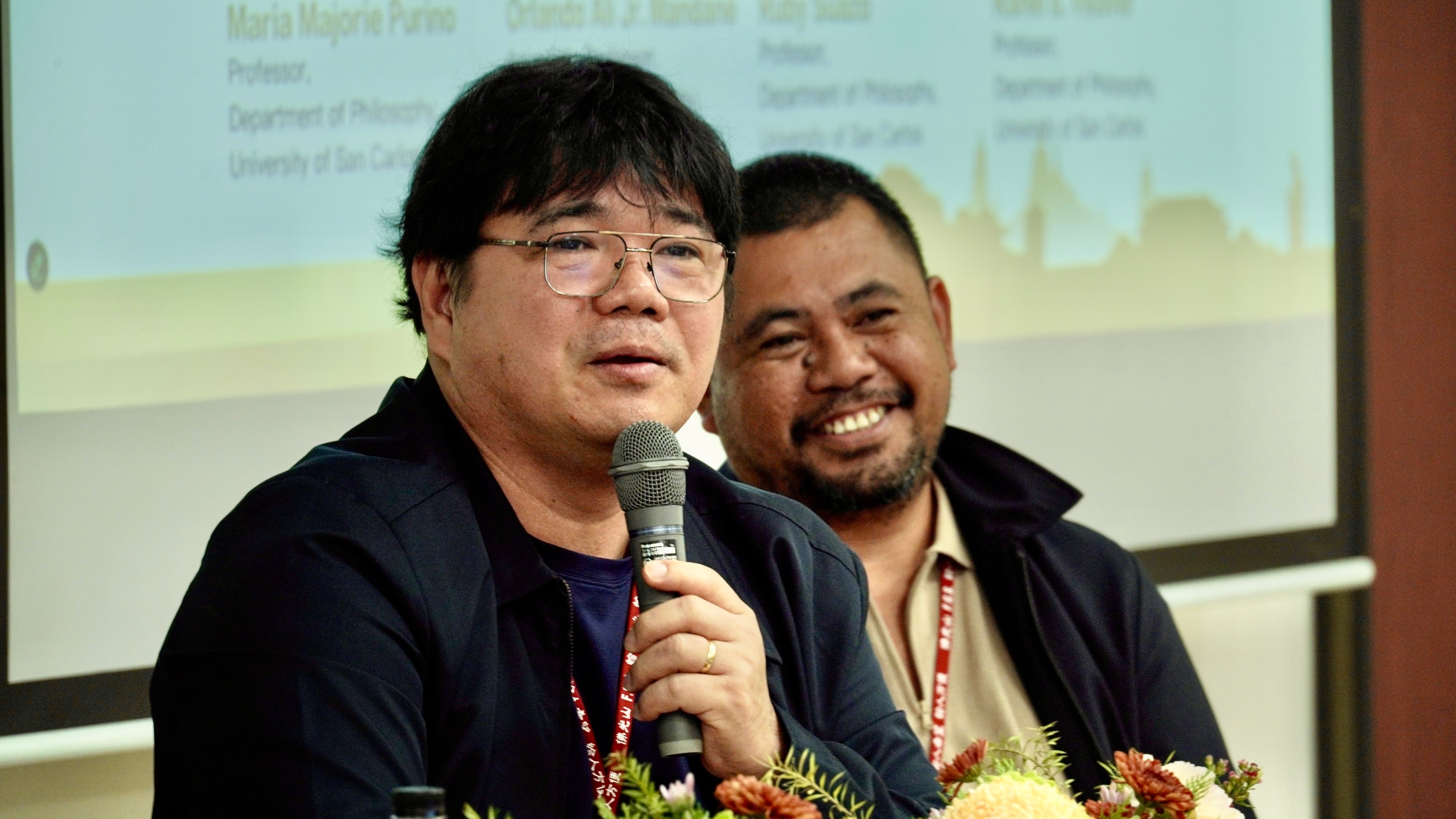

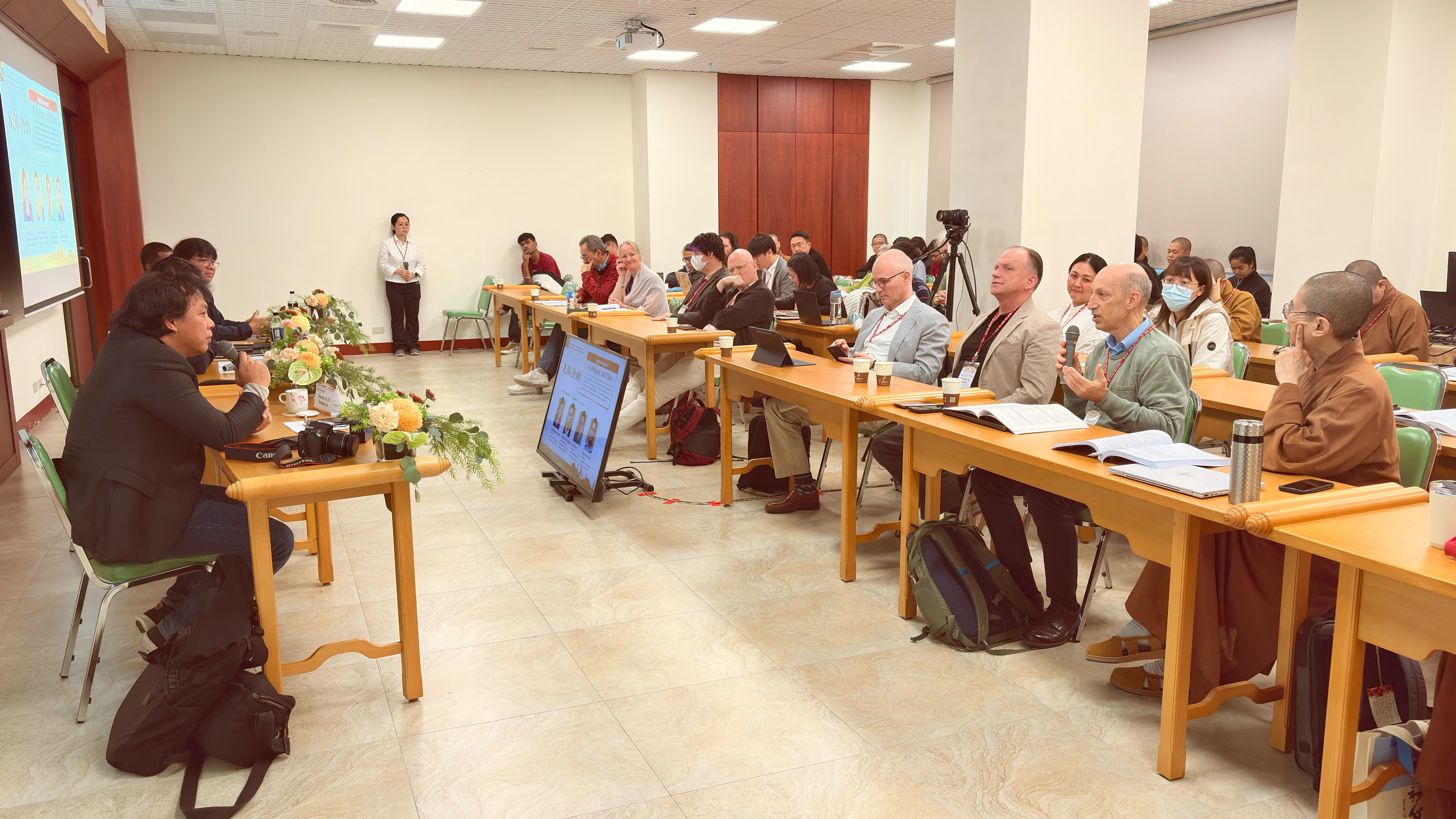
The first English panel of the 11th Symposium on Humanistic Buddhism, themed "AI, Religion, and Ethics", brought four scholars from the University of San Carlos in the Philippines together to examine how artificial intelligence is reshaping moral and spiritual perspectives across diverse religious and philosophical traditions. Chaired by Professor Maria Majorie Purino, the session offered a rich cross-cultural ethical dialogue addressing grief technologies, conceptions of the good life, Filipino relational ethics, and the AI alignment problem through Buddhist, Confucian, and Catholic lenses.
Technology, Mortality, and Human Flourishing
Professor Maria Majorie Purino opened the session with her presentation, “Thanatology, Grief Tech AI, and the Buddhist View of Impermanence and Non-Attachment,” which examined “grief tech”, AI applications that create simulated conversational agents, or “ghostbots,” enabling digital interactions with deceased individuals. Her paper examined this technology through Heideggerian thanatology and Buddhist teachings on impermanence and non-attachment, arguing that while such technologies may offer temporary emotional comfort, they risk delaying authentic engagement with grief by fostering artificial intimacy. She concluded that genuine compassion and the true work of grieving remain grounded in embodied human relationships and the acceptance of impermanence, quoting Ven. Miao Guang's observation that "AI cannot cultivate compassion, which requires affective and ethical intentionality."
Associate Professor Orlando Ali Jr. Mandane, in his presentation “Artificial Intelligence and the Good Life”, examined the impact of artificial intelligence on society's vision of the good life, drawing on insights from media theorist Neil Postman and philosopher Albert Borgmann. He argued that contemporary AI-driven culture risks evolving into a "technopoly," where technology increasingly dictates values and ways of living at the expense of meaningful human engagement. His paper concluded that the pursuit of the good life requires mindful resistance to distraction and a conscious effort to ensure that technology serves, rather than replaces, authentic human flourishing.
Relational Ethics and the Alignment Problem
In his presentation “Shared Humanity and Sacred Responsibility: Filipino Relational Ethics in the Age of AI”, Professor Ruby Suazo proposed a spiritually grounded framework for AI ethics rooted in Filipino relational values of kapwa (shared humanity) and damayan (empathetic solidarity), developed in dialogue with Catholic Social Teaching and Buddhist ethics. Critiquing dominant AI paradigms shaped by individualism and market logic, she argued that technology is never morally neutral but a relational force that must uphold human dignity and the common good. Her paper demonstrated how Filipino moral thought challenges algorithmic bias and digital exclusion, concluding that ethical AI governance requires harmonizing innovation with compassion.
Professor Ranie B. Villaver directly addressed the AI alignment problem through the ethical lenses of Buddhism, Confucianism, and Christian-Catholic morality by presenting “ Buddhism and Confucianism and Artificial Intelligence Alignment.” Rejecting ethical egoism as a suitable foundation, he argued that all three traditions converge on the primacy of concern for others' well-being: Buddhism emphasizes enlightenment through the dissolution of self-centeredness, Confucianism upholds moral self-cultivation, and Catholicism calls for love and compassion. His paper proposed a pluralistic yet unified ethical framework in which AI systems are aligned with commonsense morality rather than self-interest.
The ensuing question and answer session generated thoughtful exchanges between presenters and attendees. Venerable Dr. Juewei asked about the intention behind researching grief technology in the Philippines. Alex Amies (Ph.D. student from the University of the West) inquired whether AI, by consolidating information that people have labored to compile over the years, truly contributes to a good life. Jodi Bush (Consultant, the Humanistic Buddhism Centre (HBC) at Nan Tien Institute), questioned whether AI aligns with human nature and how humans might mutually adapt alongside AI. Professor Purino responded by emphasizing the importance of pausing, reflecting, and practicing the Three Acts of Goodness when situations feel beyond control. Associate Professor Mandane and Professor Suazo added that we must not be misguided by technology and should preserve human and emotional connections. Professor Thomas Doctor raised the question of balancing AI with maintaining the human condition, to which panelists responded by highlighting the value of increased productivity for mental restoration. Associate Professor Mandane offered the example of the Orato Flow AI translation platform, noting that AI tools can be sensitive to language nuances, while Professor Suazo emphasized using AI mindfully.
Together, the four papers offered complementary perspectives on AI ethics, weaving ancient wisdom traditions with contemporary technological challenges and demonstrating that culturally rooted and theologically informed approaches can meaningfully address the pressing ethical questions posed by artificial intelligence.
