


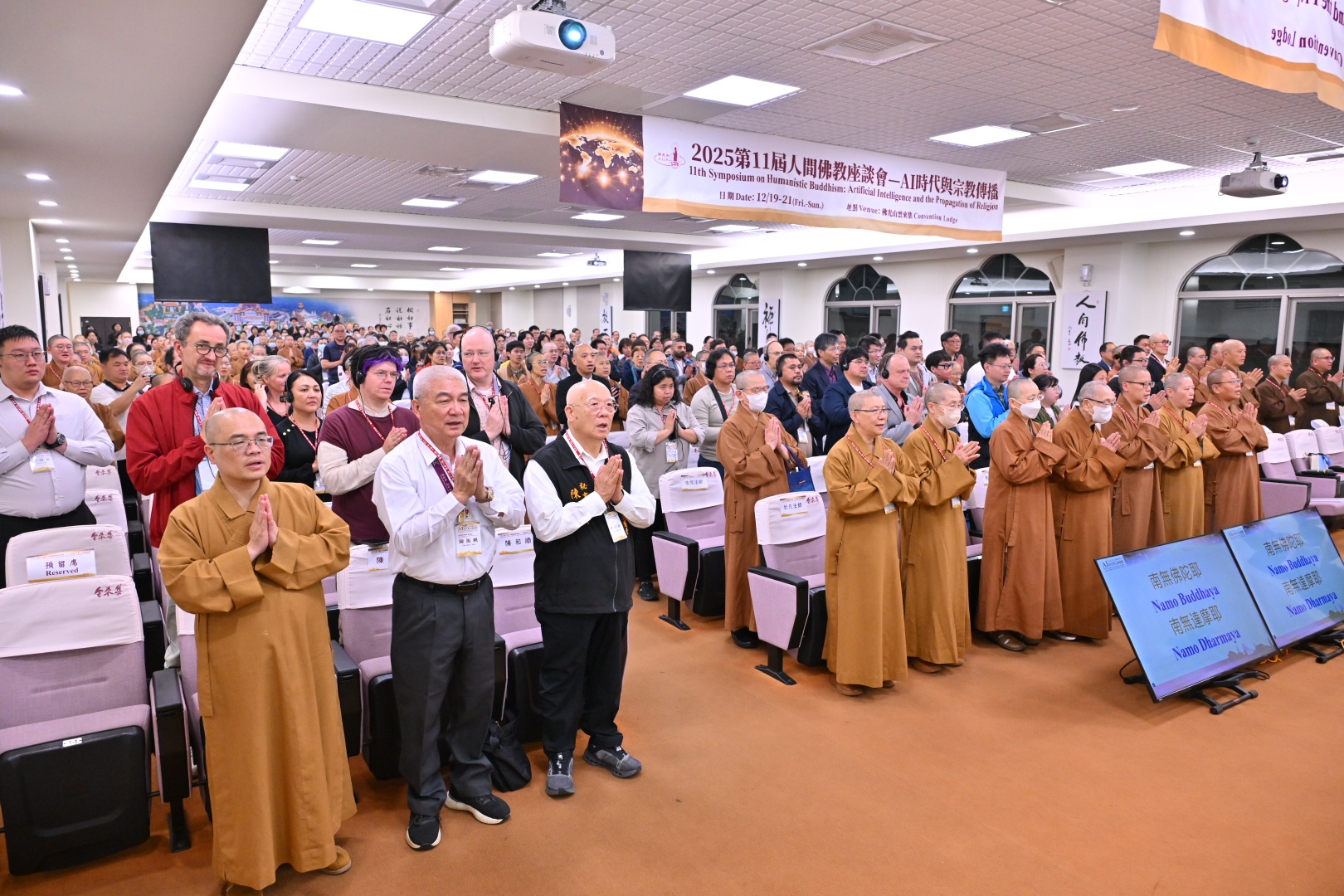
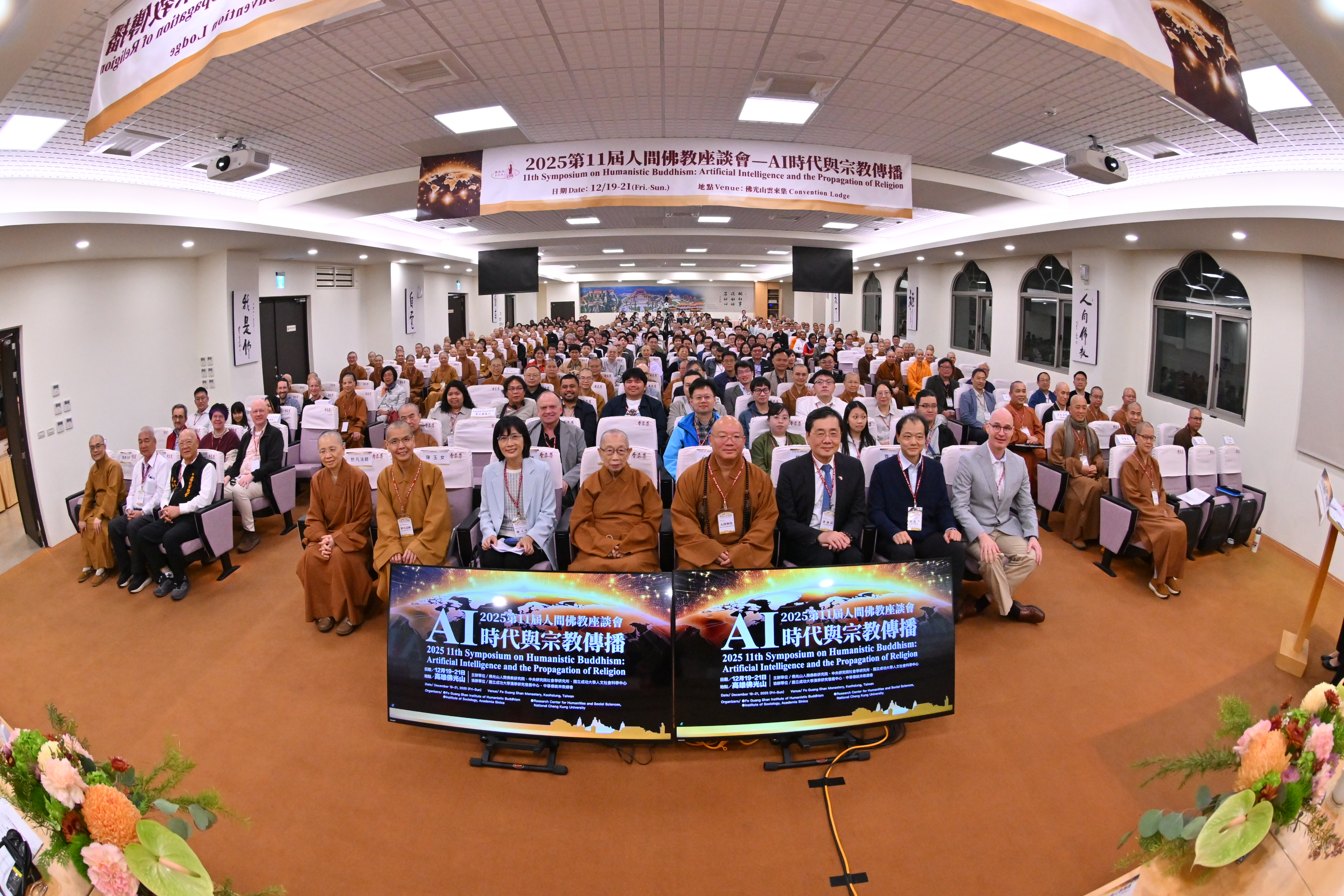
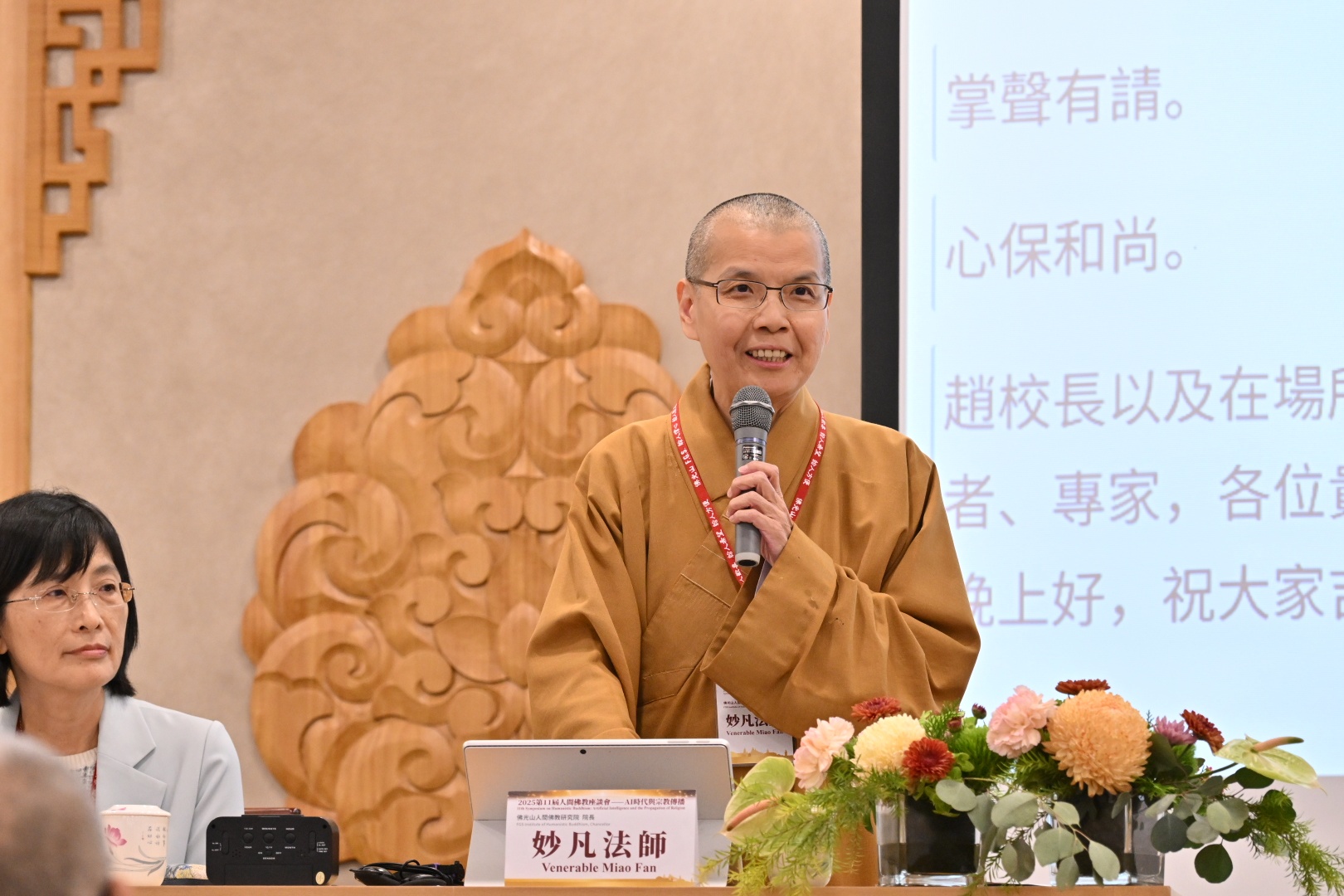
Jointly organized by the Fo Guang Shan Institute of Humanistic Buddhism, the Institute of Sociology at Academia Sinica, and the Research Center for Humanities and Social Sciences at National Cheng Kung University, the 11th Symposium on Humanistic Buddhism was held from December 19 to 21, 2025, at Fo Guang Shan. Centered on the theme “Artificial Intelligence and the Propagation of Religion,” the three-day bilingual symposium brought together over 400 scholars and participants, both onsite and online, to examine how emerging technologies are reshaping religious studies, practice, and modes of outreach.
Participants came from 13 countries and regions, including the United States, Germany, France, the Netherlands, Australia, New Zealand, the Philippines, and Taiwan, representing more than 40 academic and educational institutions worldwide. The presenters reflected a wide range of professional backgrounds, spanning Buddhist doctrine and spiritual practice, interreligious and humanistic studies, digital humanities and artificial intelligence theory, as well as multimedia presentation, pedagogical applications, and knowledge translation. This diversity highlighted the rich interdisciplinary integration of AI and religious studies.
Opening Ceremony
The opening ceremony featured addresses from distinguished guests representing monastic, academic, and research institutions, including Most Venerable Hsin Bau (Head Abbot of Fo Guang Shan), Ven. Tzu Hui (Founding Deputy Chancellor of the Fo Guang Shan Institute of Humanistic Buddhism) and Heshun Chen (Secretary-General of the Chunghua Federation of Traditional Religious Associations). Venerable Miao Fan (Chancellor of the Fo Guang Shan Institute of Humanistic Buddhism) introduced that Venerable Master Hsing Yun's original intent in initiating the symposium was to promote dialogue between Humanistic Buddhism and various sectors, jointly explore issues related to Humanistic Buddhism and modern society, and build research resources and a shared exchange platform. Most Venerable Hsin Bau expressed hope that the expertise of invited scholars and dialogues with them would yield knowledge and strategies for propagating the Dharma using artificial intelligence. Professor Yu-Nu Chen (Vice President of National Cheng Kung University) questioned whether AI could solve the most pressing life issues and suggested developing Buddha Intelligence (BI) within ourselves. Wei-Hsian Chi (Research Fellow of the Institute of Sociology at Academia Sinica) AI involves complex issues of social class and community formation, which require religious responses. Dr. Marcus Bingenheimer (Associate Professor, Department of Religion at Temple University) expressed anticipation for the intriguing possibilities that AI-related research would present.
Keynote Speeches
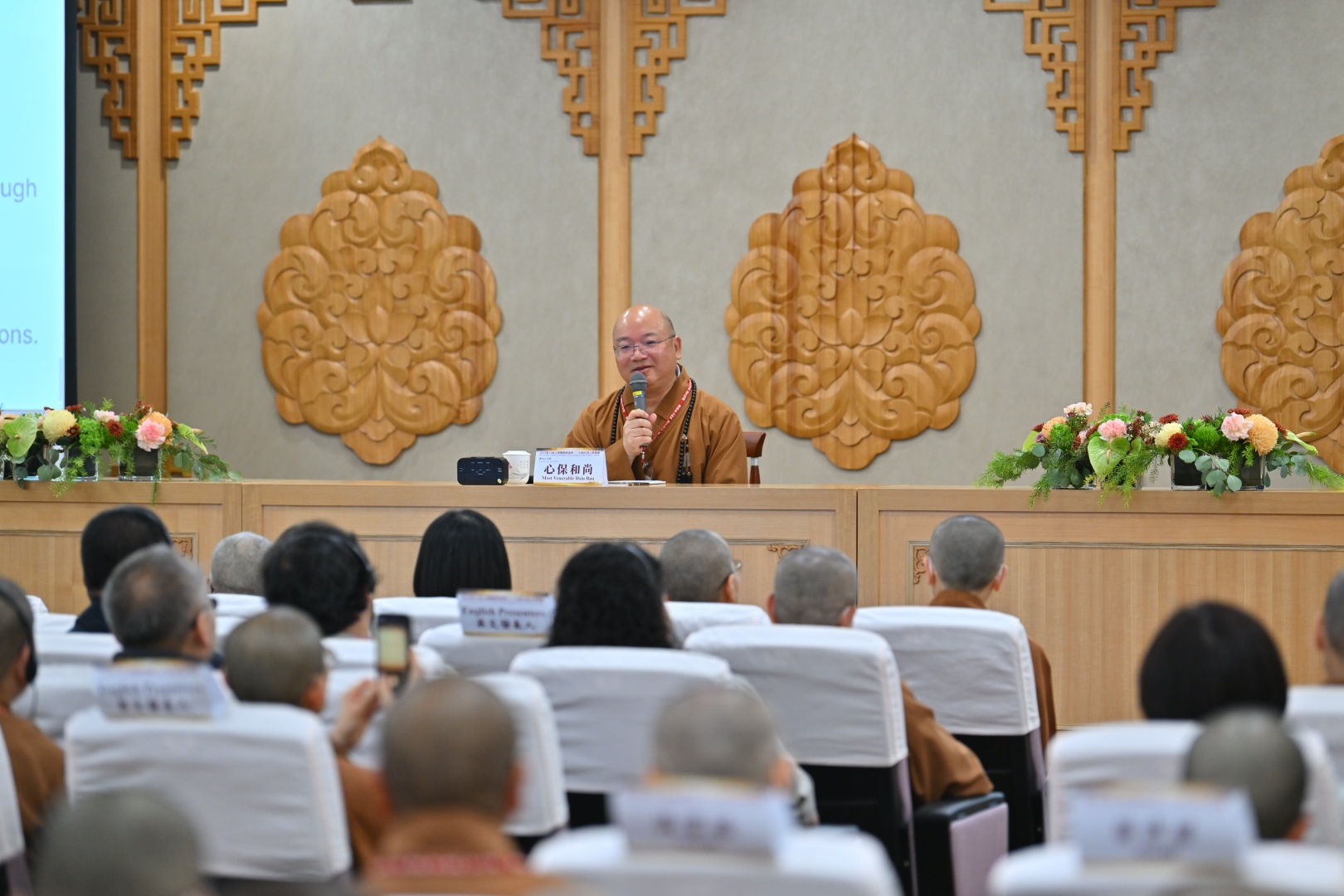
The symposium featured two keynote speeches that set the intellectual foundation for the discussions that followed. In the first keynote, "Reflections on Religious Communication in the Age of AI," Most Venerable Hsin Bau offered insights on the opportunities and challenges that artificial intelligence presents for religious communities. He began by referencing a news article stating that the mind stores impressions in fragments, thus underscoring the importance of reflection. Viewing AI from the perspective of dependent origination, he reminded attendees to see AI as the accumulation of human knowledge and wisdom throughout history. Beyond making use of AI, he encouraged developing inner Buddha Intelligence through hearing, contemplation, and cultivation.
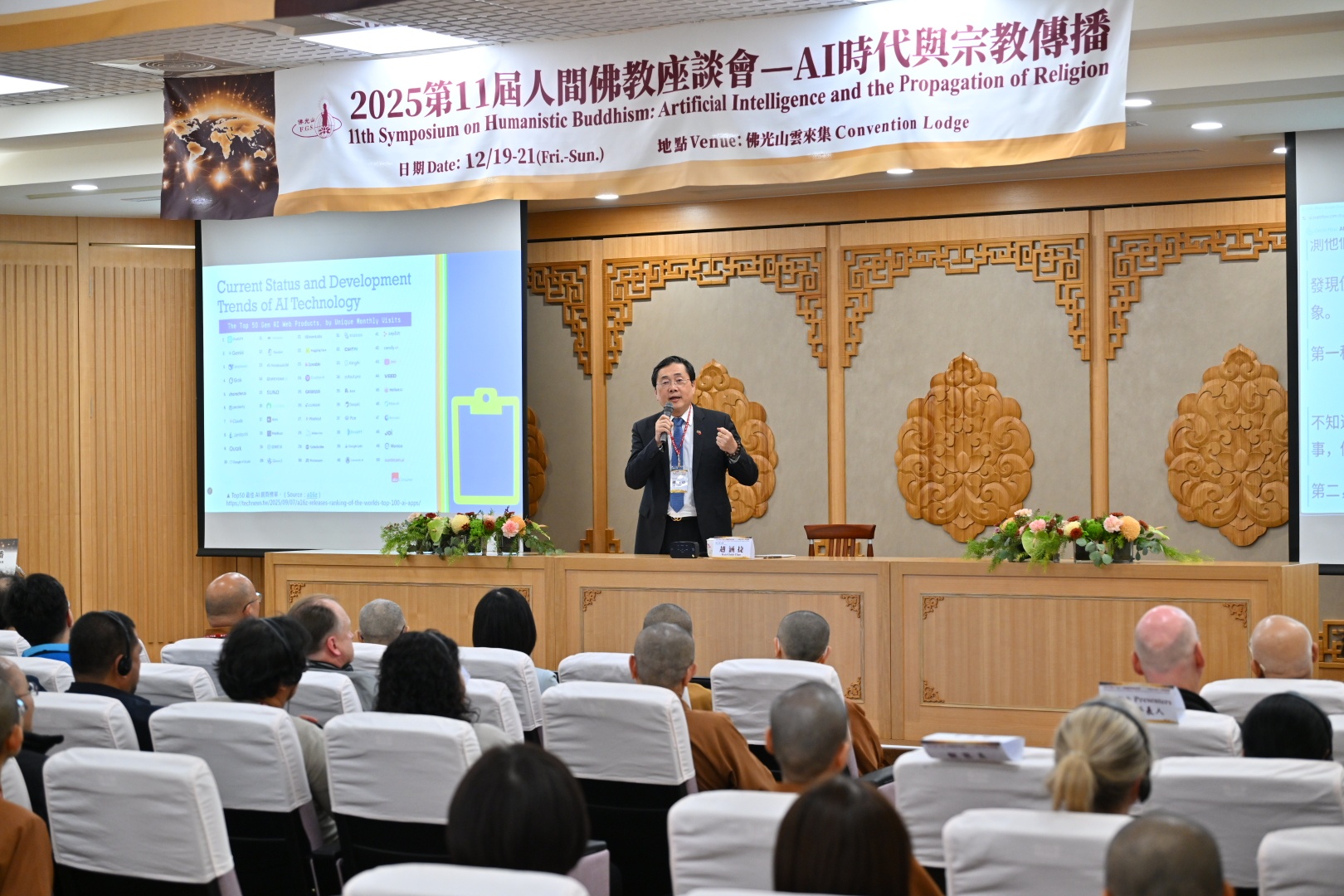
The second keynote, "How to Promote the Three Acts of Goodness AI on Campus," was delivered by Han Chieh Chao, President of Fo Guang University. Drawing on practical experience in higher education, President Chao explored strategies for integrating AI technologies with the humanistic values central to Fo Guang Shan's educational philosophy. He emphasized the importance of guiding students with the right mindset and strategies when using AI tools, noting that clearly grasping the context and understanding current societal events and AI's overall development are essential to making this possible.
Interdisciplinary Exchange
Through keynote talks, panels, and dialogues, the symposium brought together scholars and practitioners from Buddhist studies, the humanities, digital humanities, AI research, multimedia innovation, and education. Their cross-disciplinary exchanges showcased the multi-layered potential of AI technologies in religious scholarship, Dharma propagation, and broader cultural innovation. The Symposium reflected the continued relevance of Venerable Master Hsing Yun's vision for Fo Guang Shan to serve as a platform where world scholars can advance the study and application of Humanistic Buddhism in addressing contemporary challenges.
【Photo Credits: Chi Chao Zhao】
